Why AdSense Rejected Your Website? Complete Guide 2026
Why AdSense Rejected Your Website? Google AdSense is one of the most popular advertising programs for website monetization. It allows bloggers and website owners to earn revenue by displaying ads on their content. However, many applicants face rejection when they first apply for AdSense. This can be frustrating, especially after putting effort into building a website and writing content.
Understanding the reasons behind AdSense rejection is the first step toward fixing your website and improving your chances of approval. Google follows strict policies to ensure that only high-quality, user-friendly, and trustworthy websites are accepted into its program. If your website does not meet these standards, it will be rejected.
This article explains the most common reasons why AdSense rejects websites, how you can fix them, and what steps you should take to improve your approval chances.
Important Links and Information
| Topic | Description |
|---|---|
| AdSense Program Policies | Rules that every website must follow to get approval |
| Google Search Central | Guidelines for SEO and website structure |
| Privacy Policy Requirement | Mandatory page explaining user data usage |
| Website Quality Guidelines | Standards for content and user experience |
| AdSense Eligibility Criteria | Basic requirements for approval |
1. Low-Quality or Thin Content
One of the most common reasons for rejection is low-quality content. If your website has very short articles, copied content, or poorly written posts, Google considers it unworthy of monetization.
Google prefers websites that provide value to users. Content should be original, detailed, and useful. Articles with less than 300–500 words or AI-generated spam without editing often lead to rejection.
To fix this:
- Write detailed articles (at least 1000+ words when possible)
- Avoid copied or spun content
- Focus on providing real value to readers
- Use proper grammar and structure
2. Missing Important Pages
AdSense requires certain essential pages to understand your website’s purpose and policies. Websites without these pages are often rejected.
Important pages include:
- About Us
- Contact Us
- Privacy Policy
- Disclaimer
- Terms and Conditions
These pages build trust and show that your website is legitimate and transparent. Without them, Google cannot verify your credibility.
To fix this:
- Create all required pages before applying
- Ensure they are clearly written and not empty templates
3. Poor Website Design and User Experience
A website that looks unprofessional or is difficult to navigate will likely be rejected. Google values user experience highly.
Common issues include:
- Broken layout
- Poor mobile responsiveness
- Slow loading speed
- Confusing navigation
- Too many ads or popups (before approval)
To fix this:
- Use a clean and responsive theme
- Improve site speed using optimization tools
- Ensure mobile compatibility
- Keep navigation simple and clear
4. Insufficient Content
Websites with very few articles are often rejected. If your website has only a handful of posts, Google may consider it incomplete.
There is no exact number, but generally:
- At least 15–30 high-quality articles are recommended
- Each article should provide meaningful value
To fix this:
- Publish consistent content before applying
- Build content around a specific niche
- Avoid launching too early
5. Policy Violations
Google AdSense has strict content policies. Websites containing prohibited content are automatically rejected.
Examples include:
- Adult content
- Copyrighted material
- Illegal activities
- Violence or hate speech
- Hacking or illegal software
Even minor violations can affect approval.
To fix this:
- Carefully review AdSense program policies
- Remove any risky or unclear content
- Keep your niche safe and compliant
6. Lack of Organic Traffic
Although AdSense does not officially require high traffic, websites with zero or very low traffic often get rejected.
Google wants to see that your website is being discovered and used by real users.
To fix this:
- Work on SEO (Search Engine Optimization)
- Submit your site to Google Search Console
- Share content on social platforms
- Build backlinks naturally
7. Navigation and Structure Issues
A poorly structured website confuses both users and search engines. If your site is not well organized, approval becomes difficult.
Common issues:
- No proper menu
- Missing categories
- Unorganized content
- Broken internal linking
To fix this:
- Create clear categories
- Add a proper navigation menu
- Link related articles internally
8. Duplicate or Scraped Content
Google strictly rejects websites that use copied content. Even partially copied articles can cause rejection.
To fix this:
- Write original content only
- Use plagiarism checkers before publishing
- Add personal insights or unique value
9. Website Not Fully Indexed
If Google has not indexed your pages properly, AdSense may reject your application.
To fix this:
- Submit sitemap to Google Search Console
- Request indexing of important pages
- Fix crawl errors
10. Domain Age and Trust Issues
New websites often face rejection because they lack trust signals. While domain age is not an official requirement, older and more established websites usually perform better.
To fix this:
- Wait at least a few weeks after launching before applying
- Build consistent content and structure
- Improve domain authority over time
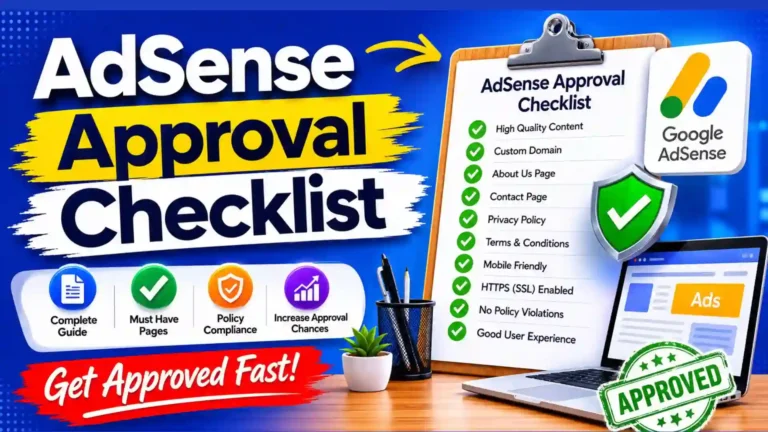
How to Improve Your AdSense Approval Chances?
To increase your chances of approval, focus on:
- High-quality original content
- Proper website structure
- Fast loading speed
- Mobile-friendly design
- Required legal pages
- SEO optimization
- Consistent publishing schedule
Think of AdSense approval as a quality test rather than just an application form.
FAQ about Why AdSense Rejected Your Website?
Why did AdSense reject my website?
Your website may have been rejected due to low-quality content, missing pages, policy violations, poor design, or insufficient content.
How many articles are needed for AdSense approval?
There is no fixed number, but most successful websites have at least 15–30 high-quality articles.
Can a new website get AdSense approval?
Yes, but it must meet all quality guidelines and appear complete and professional.
Does traffic matter for AdSense approval?
Traffic is not a strict requirement, but some organic traffic improves trust and approval chances.
How long should I wait before reapplying?
You should fix all issues first, then wait at least 1–2 weeks before reapplying.
Conclusion
AdSense rejection is not the end of your monetization journey. In most cases, it is a sign that your website needs improvement in quality, structure, and compliance. Google wants websites that provide real value to users, follow policies, and offer a good user experience.
By improving your content quality, fixing technical issues, adding required pages, and following SEO best practices, you can significantly increase your chances of approval.
Instead of rushing into reapplication, focus on building a strong foundation. A well-optimized website not only helps you get AdSense approval but also ensures long-term success in online monetization.
If you treat your website as a professional digital asset rather than just a blog, AdSense approval becomes much easier to achieve.